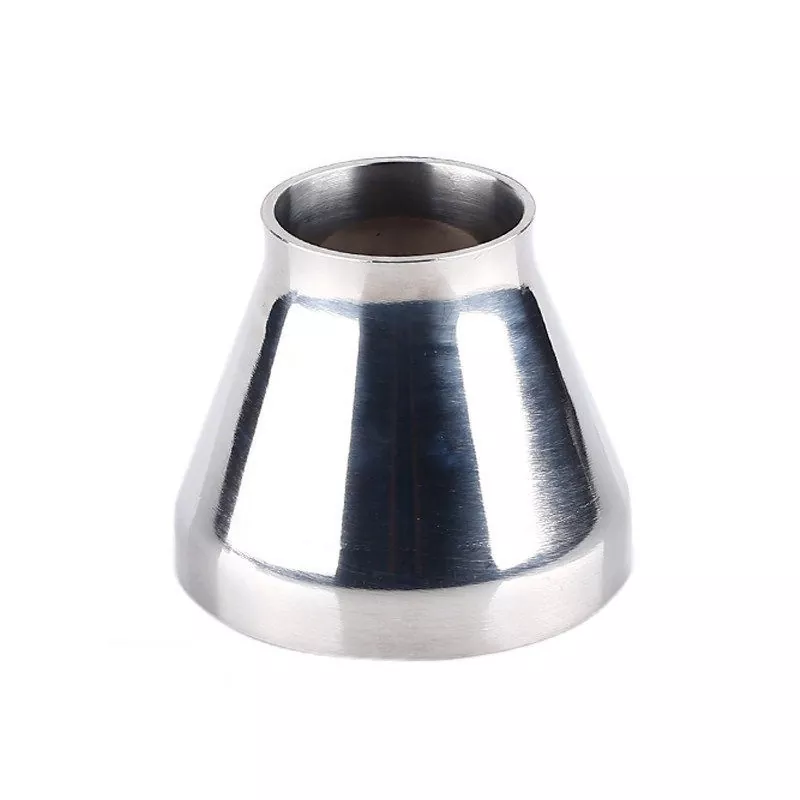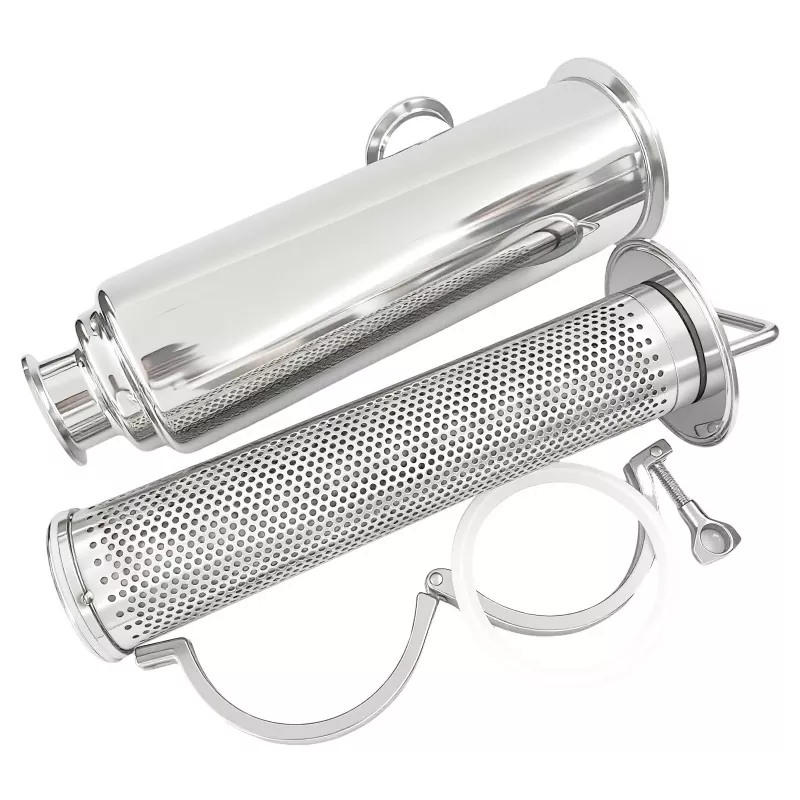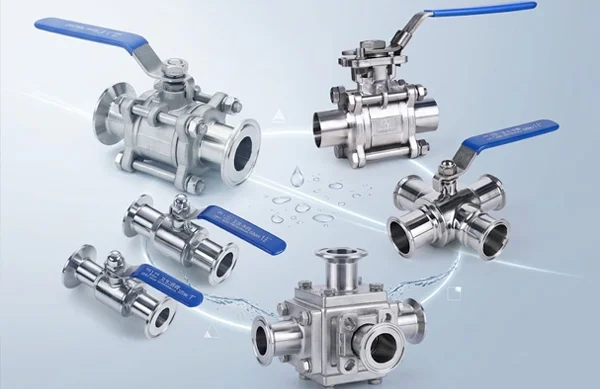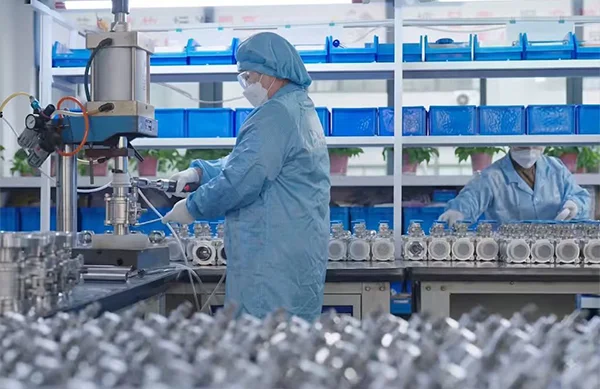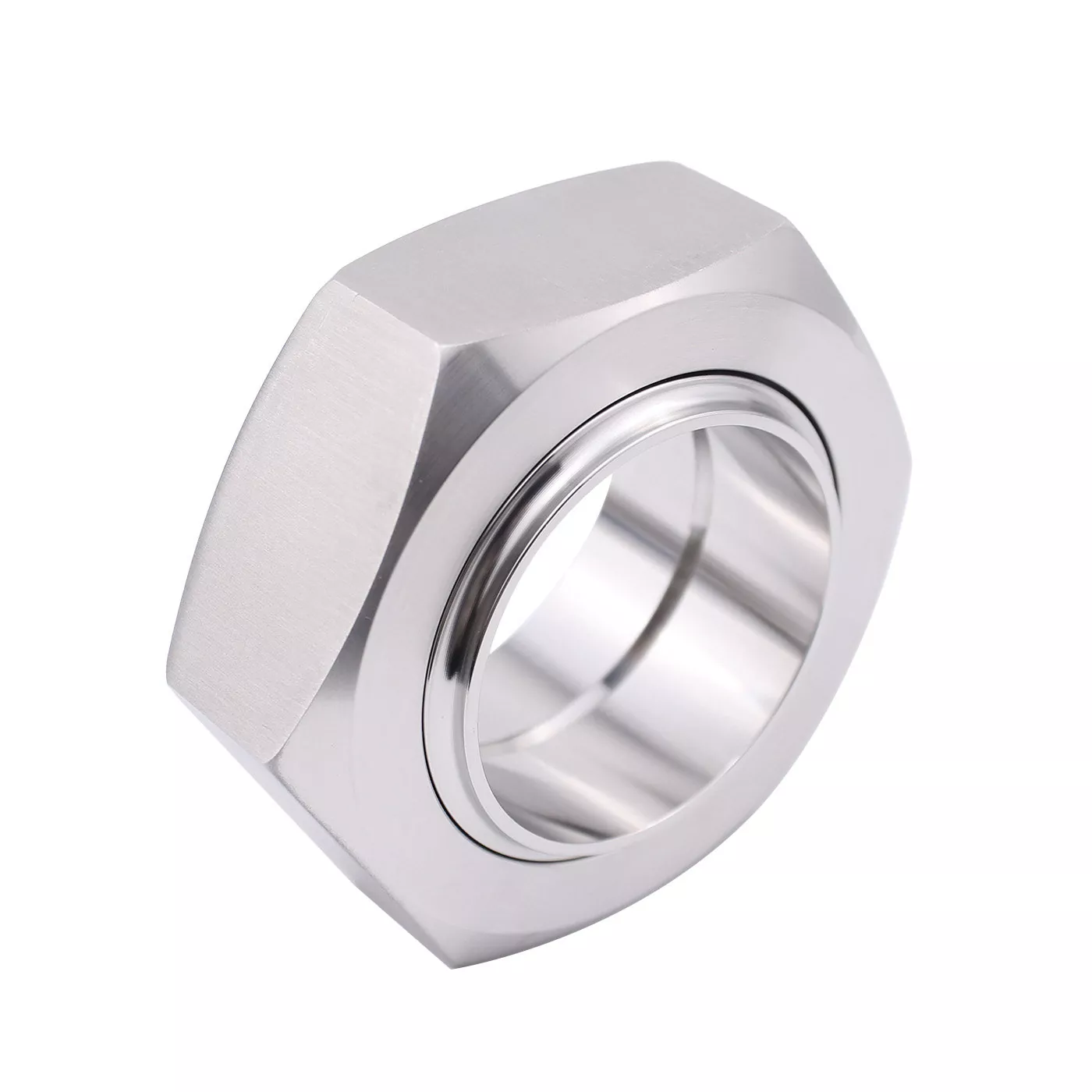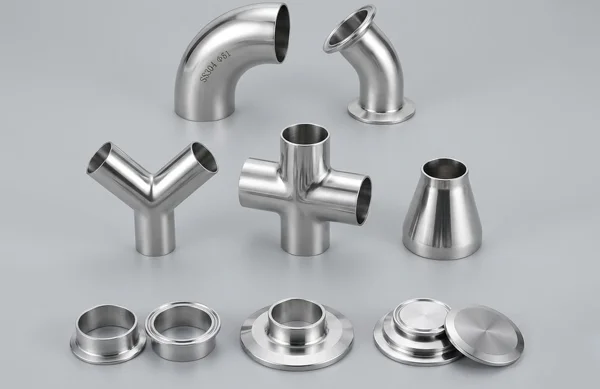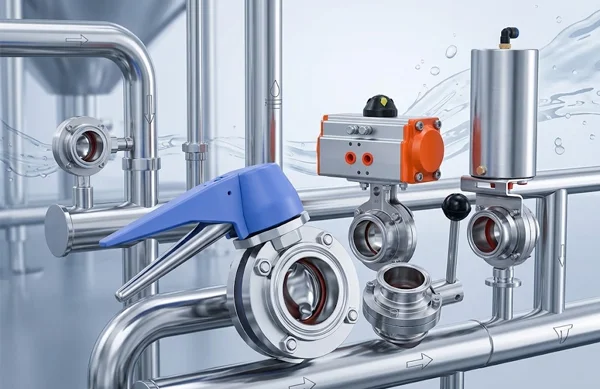

3A Sanitary Stainless Steel Union Fittings are designed for hygienic process piping where reliable sealing, easy disassembly, material compatibility, and cleanability matter. DINGYUE supplies 304 and 316L stainless steel union sets for food, beverage, pharmaceutical, bioprocess, and sanitary equipment applications, with multiple gasket options and configurations for replacement or new piping systems.
Sanitary union fittings provide a practical alternative to permanently welded connections when a process pipeline requires regular inspection, cleaning, maintenance, or equipment replacement. A properly matched 3A union assembly combines a male part, liner, nut, and sealing element to create a detachable connection while supporting hygienic process requirements. DINGYUE offers 304 and 316L stainless steel options, with EPDM, silicone, FKM, and PTFE gasket choices. Working pressure can reach up to 10 bar (145 psi) at ambient temperature, while EN 10204 3.1 material documentation and 3-A certification options support traceability and sanitary-system requirements.
Table of Contents
- What Are 3A Sanitary Stainless Steel Union Fittings?
- How Are 3A Union Fittings Constructed?
- Key Specifications and Material Options
- Why Are Sanitary Unions Important in Process Piping?
- Where Are 3A Union Fittings Used?
- How Should You Select the Right Union Fitting?
- Installation, Inspection, and Maintenance Considerations
- Frequently Asked Questions
- Choosing a Reliable Sanitary Fitting Supplier
What Are 3A Sanitary Stainless Steel Union Fittings?
A sanitary union is a detachable pipe connection designed to join two sections of process piping while allowing the connection to be opened for inspection, cleaning, or replacement. Unlike a permanent welded joint, the union structure can be disconnected without cutting the pipe or performing additional welding work.
The 3A designation refers to sanitary design requirements associated with hygienic equipment and piping used in industries such as food, dairy, beverage, and pharmaceutical processing. The design emphasizes cleanability, appropriate materials, and connection geometry suitable for sanitary service.
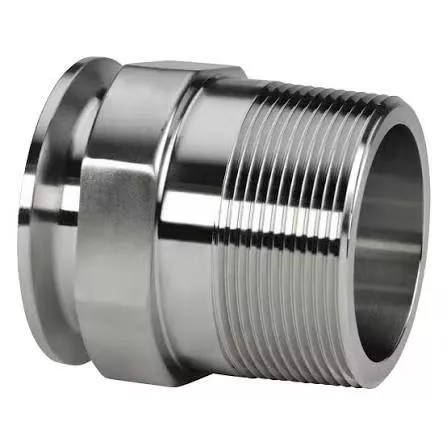
A typical union assembly includes a threaded nut, male component, liner, and gasket or sealing element. When these parts are correctly matched and assembled, they form a secure connection while maintaining a suitable internal flow path.
For engineers specifying sanitary piping, the key consideration is not simply whether a fitting is made from stainless steel. The material grade, dimensional standard, sealing material, surface condition, pressure requirement, and compatibility with the existing pipeline should all be evaluated together.
How Are 3A Union Fittings Constructed?
The performance of a sanitary union depends on the interaction of several precision components. Each part has a specific role in maintaining mechanical stability and sealing performance.
- Union nut: Provides the mechanical force required to bring the mating components together.
- Male part: Connects with the corresponding liner and contributes to the overall union geometry.
- Liner: Creates the opposite connection surface and supports a consistent pipe interface.
- Gasket: Provides the sealing interface between mating surfaces and should be selected according to process conditions.
This modular construction is particularly useful in processing facilities where piping components may need to be removed frequently. Instead of redesigning or rewelding a pipeline, maintenance personnel can disconnect the union and gain access to the relevant section.
Key Specifications and Material Options
Choosing a union should begin with the actual operating conditions of the piping system. Material, gasket type, dimensional standard, pressure, and documentation can all affect the suitability of the final connection.
| Parameter | DINGYUE Specification | Selection Consideration |
|---|---|---|
| Material | AISI 304 / 316L stainless steel | Select according to corrosion resistance and process media |
| Design Standard | 3-A sanitary standard, US / Imperial pipe sizes | Match the existing piping system |
| Components | Male part, liner, round nut, gasket | Complete matched sets simplify replacement |
| Gasket Options | EPDM, Silicone, FKM, PTFE | Consider temperature, chemicals, and process fluid |
| Working Pressure | Up to 10 bar (145 psi) at ambient temperature | Verify actual system pressure before selection |
| Documentation | EN 10204 3.1 MTC and 3-A certification | Useful for traceability and sanitary projects |
304 stainless steel is commonly selected for general food and beverage processing. 316L stainless steel offers improved corrosion resistance and is often considered for pharmaceutical, chemical, and more demanding hygienic environments.
Gasket selection is equally important. EPDM, silicone, FKM, and PTFE can have different resistance characteristics, so the sealing material should be matched to the process fluid, cleaning chemicals, temperature, and operating conditions.
Why Are Sanitary Unions Important in Process Piping?
1. Faster Access for Maintenance
A detachable union allows technicians to separate a pipe section without cutting and rewelding the pipeline. This can simplify routine inspection, gasket replacement, equipment servicing, and system modification.
2. Hygienic Connection Design
Sanitary piping systems require connection components that support effective cleaning and reduce areas where process residues could accumulate. Properly manufactured and matched union components help maintain a cleanable connection.
3. Stainless Steel Durability
Stainless steel provides mechanical durability and corrosion resistance suitable for many demanding process environments. The appropriate grade should always be selected according to the fluid, cleaning regime, and surrounding conditions.
4. Convenient Replacement
When an existing connection becomes worn, replacing a complete union assembly can be more straightforward than modifying a welded pipeline. Correct dimensional matching remains essential for reliable installation.
5. Flexible Equipment Integration
Sanitary unions can be incorporated into process skids, tanks, pumps, valves, and other processing modules. This makes them useful for both original equipment manufacturing and maintenance projects.
Where Are 3A Union Fittings Used?
3A sanitary connections are particularly relevant to industries where cleanliness, maintenance access, and controlled fluid handling are important.
- Dairy processing: Milk, yogurt, cream, and other dairy process systems.
- Food processing: Ingredient transfer and hygienic fluid pipelines.
- Beverage production: Beverage transfer, brewing, and process equipment.
- Pharmaceutical processing: Clean fluid transfer systems and process equipment.
- Bioprocess applications: Process skids and systems requiring regular inspection.
- Sanitary equipment manufacturing: Connections for tanks, pumps, valves, and modular processing equipment.
For new equipment projects, the union should be specified together with the rest of the piping architecture. For replacement projects, dimensional compatibility with the existing pipe, thread, liner, and gasket arrangement is especially important.
How Should You Select the Right Union Fitting?
A systematic selection process can help prevent leakage, compatibility problems, and unnecessary modifications during installation.
- Confirm the sanitary standard. Make sure the connection standard matches the existing piping and equipment.
- Choose the stainless steel grade. Consider whether 304 or 316L is more appropriate for the process environment.
- Check dimensions. Verify pipe size, connection geometry, liner dimensions, and mating components.
- Select the gasket material. Review process fluid, cleaning chemicals, temperature, and sealing requirements.
- Verify pressure requirements. The fitting's working pressure must be suitable for the actual operating conditions.
- Consider documentation. Material certificates and relevant sanitary certifications can be important for controlled manufacturing environments.
- Prefer matched components. Using compatible union parts reduces the risk associated with dimensional and machining differences between suppliers.
For replacement applications, purchasing a complete matched set can be especially practical. Even when products nominally follow the same standard, machining tolerances and gasket-seat dimensions can vary between manufacturers.
Installation, Inspection, and Maintenance Considerations
Correct maintenance helps preserve sealing performance and extends the useful service life of a sanitary connection. Before disassembly, the process should be stopped and the line should be depressurized.
- Stop the process flow and safely release system pressure.
- Loosen the union nut with an appropriate tool.
- Separate the union components for inspection or cleaning.
- Inspect the gasket and sealing surfaces for wear or damage.
- Check the threads and mating components for abnormal wear.
- Clean the relevant surfaces before reassembly.
- Replace damaged or worn sealing components when necessary.
- Ensure correct alignment before returning the pipeline to service.
Particular attention should be given to gasket condition. A damaged, incorrectly positioned, or chemically incompatible gasket can compromise the entire connection even when the stainless steel components remain in good condition.
For detailed sanitary piping requirements, buyers can also review sanitary pipe union solutions and related stainless steel sanitary pipe fittings when planning a complete hygienic fluid system.
Frequently Asked Questions
What is the difference between a 3A union and an SMS or DIN union?
3A unions are designed around US sanitary standards and imperial pipe dimensions, while SMS and DIN unions follow their respective dimensional and connection standards. The fitting standard should match the existing piping system rather than being selected solely by nominal size.
Can 3A union components from different suppliers be mixed?
Although components may appear dimensionally similar, machining tolerances, threads, and gasket-seat geometry can differ. Using a complete matched union set is generally a more reliable approach when replacing an existing connection.
Are 316L 3A sanitary unions suitable for pharmaceutical systems?
316L stainless steel is commonly selected for pharmaceutical and other higher-corrosion hygienic applications because of its corrosion-resistance characteristics. Final selection should consider the specific process media, cleaning chemicals, temperature, and system requirements.
Which is better for sanitary piping, 304 or 316L stainless steel?
Neither grade is universally suitable for every application. 304 stainless steel is commonly used in general food and beverage systems, while 316L is often selected when greater corrosion resistance is required, including many pharmaceutical and chemical processing environments.
What gasket materials are available?
DINGYUE offers EPDM, silicone, FKM, and PTFE gasket options. The appropriate material depends on the process fluid, operating temperature, cleaning chemicals, and required sealing performance.
What should be checked before ordering replacement union fittings?
Confirm the sanitary standard, pipe size, material grade, connection geometry, gasket type, pressure requirement, and component configuration. For an existing pipeline, comparing the original union dimensions with the proposed replacement is particularly important.
Choosing a Reliable Sanitary Fitting Supplier
For hygienic process piping, the fitting is only one part of the overall connection system. Material grade, dimensional accuracy, sealing compatibility, certification, and component matching all contribute to dependable service. DINGYUE provides 3A sanitary union sets in 304 and 316L stainless steel, together with multiple gasket options and configurations for food, beverage, pharmaceutical, bioprocess, and OEM applications.
If you are sourcing sanitary unions for a new processing line, replacing existing components, or developing customized hygienic equipment, contact us to discuss your pipe size, material requirements, gasket selection, operating conditions, and configuration needs. DINGYUE can provide a practical sanitary connection solution based on your application and project requirements.