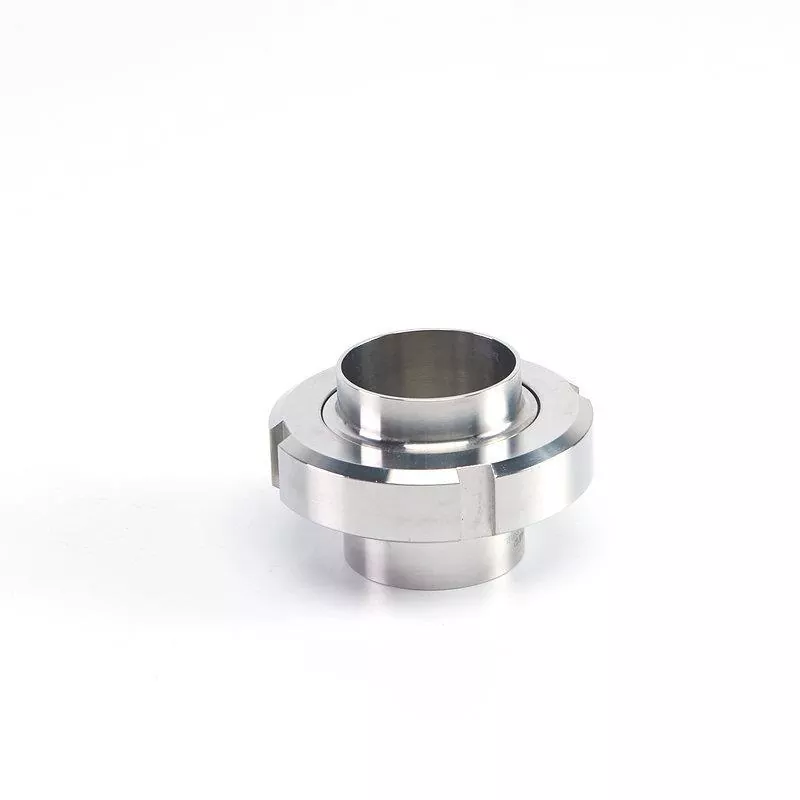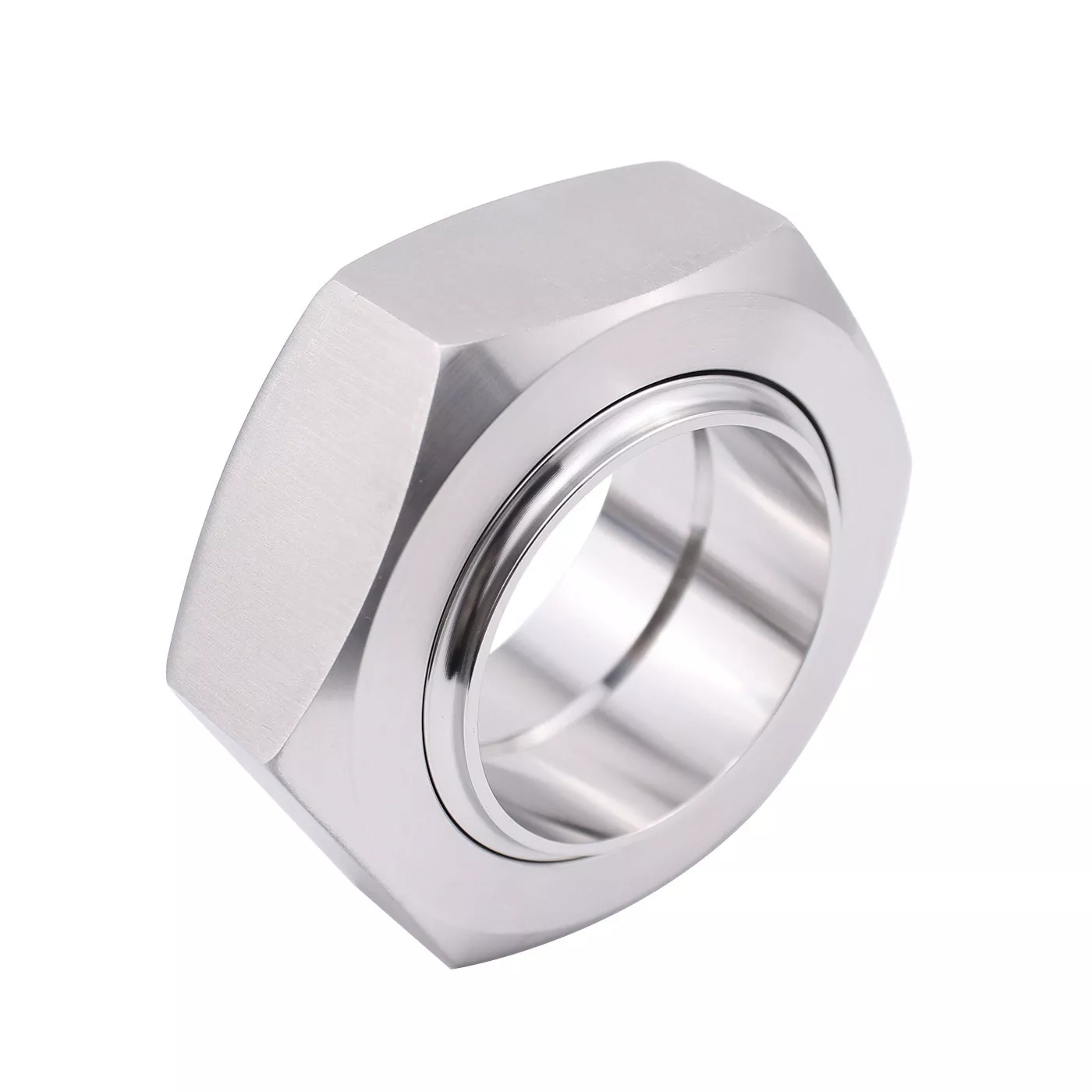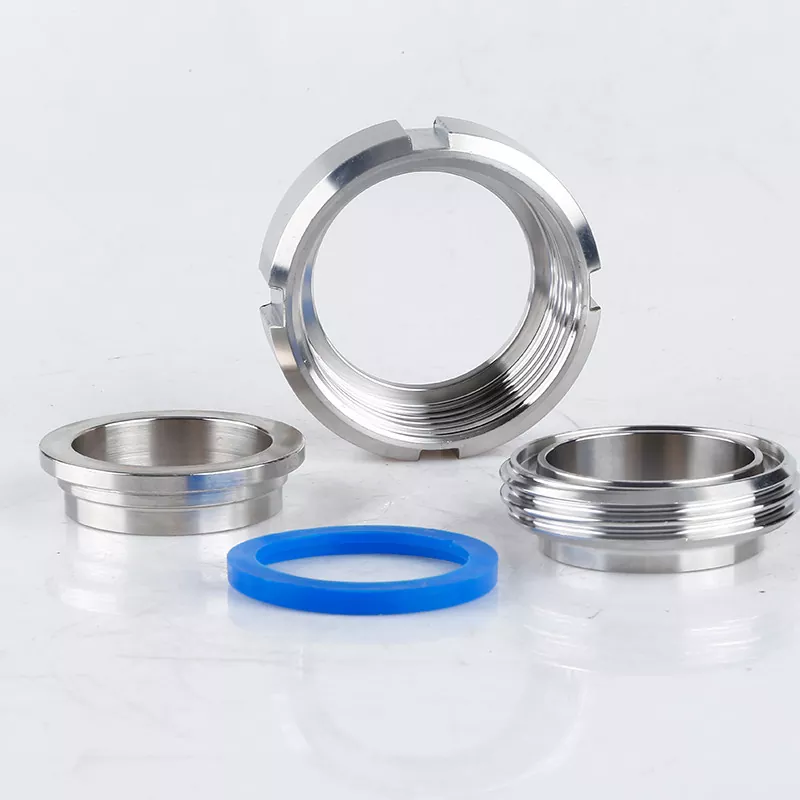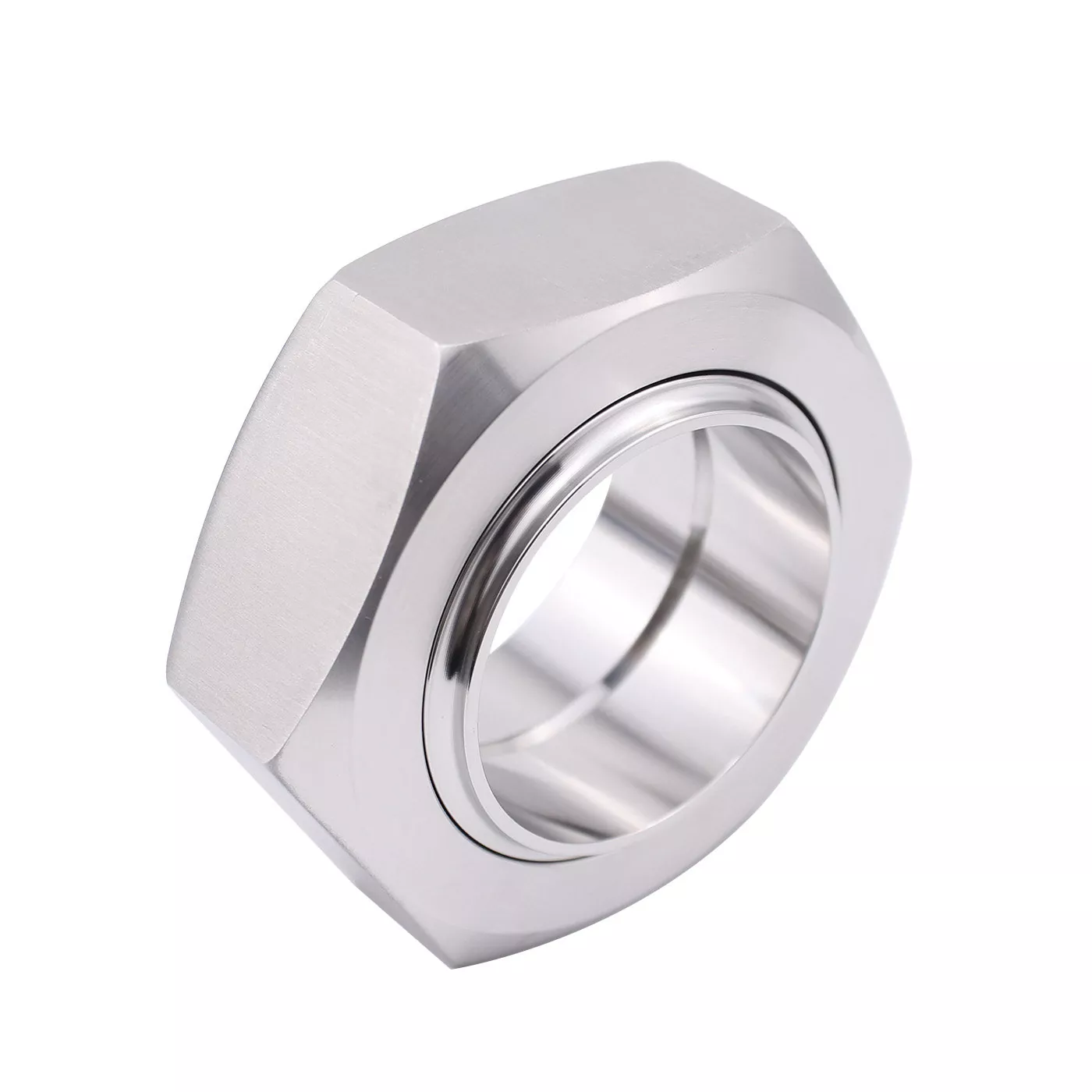
Sanitary Pipe Unions are precision-engineered fittings designed to connect two sections of hygienic tubing or pipe while allowing quick disassembly for cleaning, inspection, or maintenance. In industries such as food and beverage, pharmaceuticals, biotechnology, and cosmetics, these unions play a vital role in maintaining sterile conditions and process integrity. A typical sanitary pipe union consists of three main components: a male threaded nut, a female threaded body, and a gasket or O-ring that creates a leak-proof seal. The design permits repeated connection and disconnection without damaging the pipe ends, which is essential for clean-in-place (CIP) and sterilize-in-place (SIP) operations.
All DINGYUE sanitary pipe unions are produced in ISO 9001-certified facilities and comply with major sanitary standards. The products undergo rigorous inspection including dimensional checks, surface roughness testing, material certification, and pressure testing. Compliance details include:
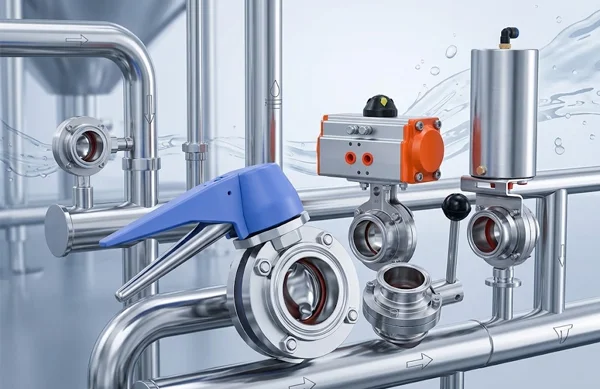
Sanitary pipe unions are used in a variety of hygienic processing environments. Their ability to be quickly disconnected makes them ideal for equipment that requires frequent cleaning or removal. Typical applications include:
Q: What is the difference between a sanitary pipe union and a sanitary coupling?
A: A sanitary pipe union consists of three separate pieces—a male nut, a female body, and a gasket—that allow the joint to be disconnected without moving the adjacent pipe. A coupling is generally a permanent or semi-permanent connection that may require cutting or welding to separate. Unions are preferred where frequent access is needed, while couplings are used for straight-line permanent connections.
Q: What gasket material should I choose for my DINGYUE sanitary pipe union?
A: The choice depends on process temperature, chemical contact, and regulatory requirements. EPDM is suitable for hot water, steam, and many food products up to 150°C (302°F). Silicone is often used in high-purity pharmaceutical applications and has good temperature range from -60°C to 200°C. Viton (FKM) offers excellent chemical resistance to oils and aggressive solvents. PTFE is the most chemically inert and can handle very high temperatures but is less elastic. Always verify compatibility with your specific media.
Q: How do I clean and maintain a sanitary pipe union?
A: Sanitary pipe unions are designed for CIP and SIP processes. During cleaning, the union should remain fully assembled to allow cleaning solutions to pass through without leakage. For manual cleaning, disassemble the union and wash all metal components with approved alkaline or acidic detergents. Rinse thoroughly with purified water. Gaskets should be inspected and replaced if they show signs of warping, cracking, or compression set. Reassemble with a new or inspected gasket and tighten to the proper torque.
Q: What is the recommended maximum operating pressure ?
A: The maximum operating pressure depends on the size, gasket material, and temperature. For sizes up to 2 inch at ambient temperature, the union can typically handle 10 bar (145 psi). Larger sizes have lower pressure ratings as shown in the dimensional table. At elevated temperatures, the pressure rating decreases. Always consult the DINGYUE pressure-temperature chart for your specific configuration before installation.
Q: Are DINGYUE sanitary pipe unions certified for food contact?
A: All DINGYUE sanitary pipe unions are made from FDA-compliant stainless steel materials. The gasket materials used are also FDA-compliant for food contact. The metal parts are free from harmful coatings or residues. Certificates of compliance are available upon request to support your quality documentation.
Q: How do I select the correct size of sanitary pipe union for my system?
A: The size should match the outside diameter of the tubing used in your process line. Measure the tube OD accurately with calipers. Common sizes are based on tube OD in inches or millimeters (e.g., 1 inch OD, 25.4 mm OD). The union must be the same size as the tube OD for butt-weld and I-line connections. For tri-clamp connections, the size also corresponds to the ferrule OD. If you are unsure, provide the tube OD and connection type, and DINGYUE will help you select the right product.
Q: What is the lead time ?
A: Standard sizes and materials are usually in stock and can be shipped within 3 to 7 business days. Custom sizes, non-standard surface finishes, or special gasket materials may require 15 to 30 days depending on order quantity and complexity. DINGYUE maintains an extensive inventory of common 304L and 316L stainless steel unions to support urgent project needs.