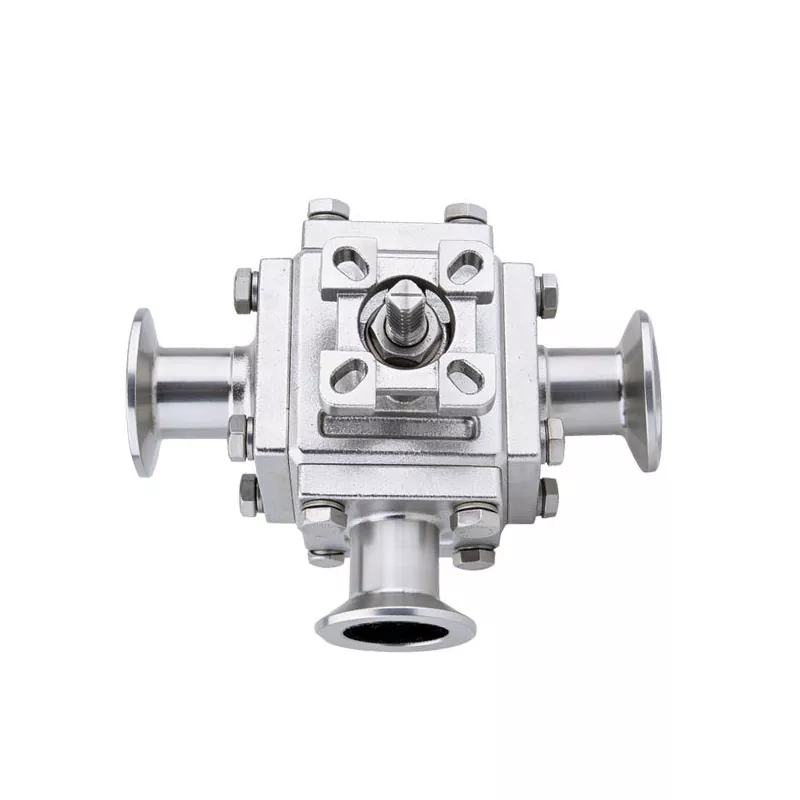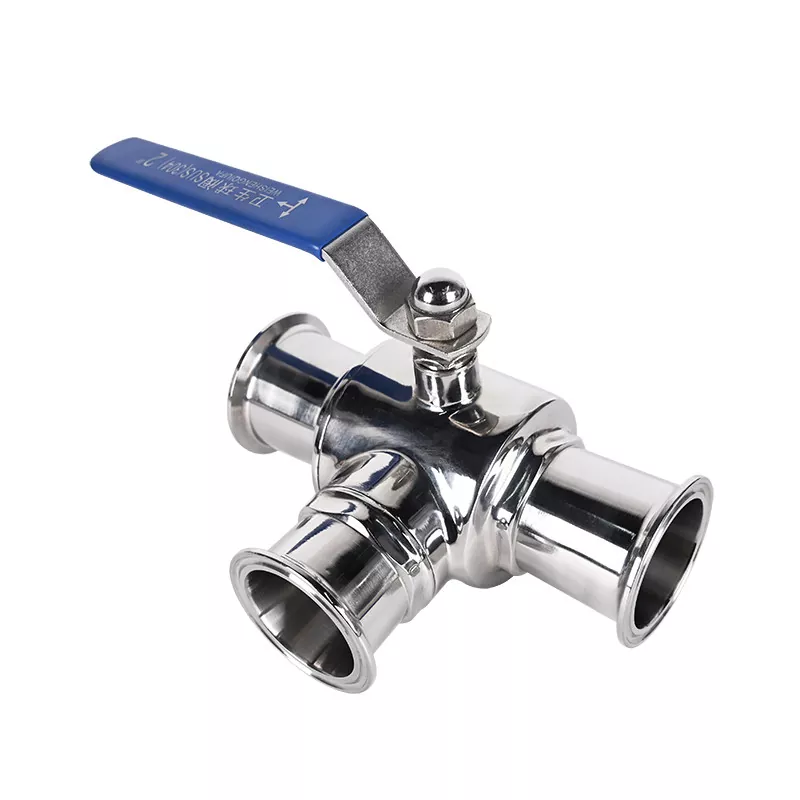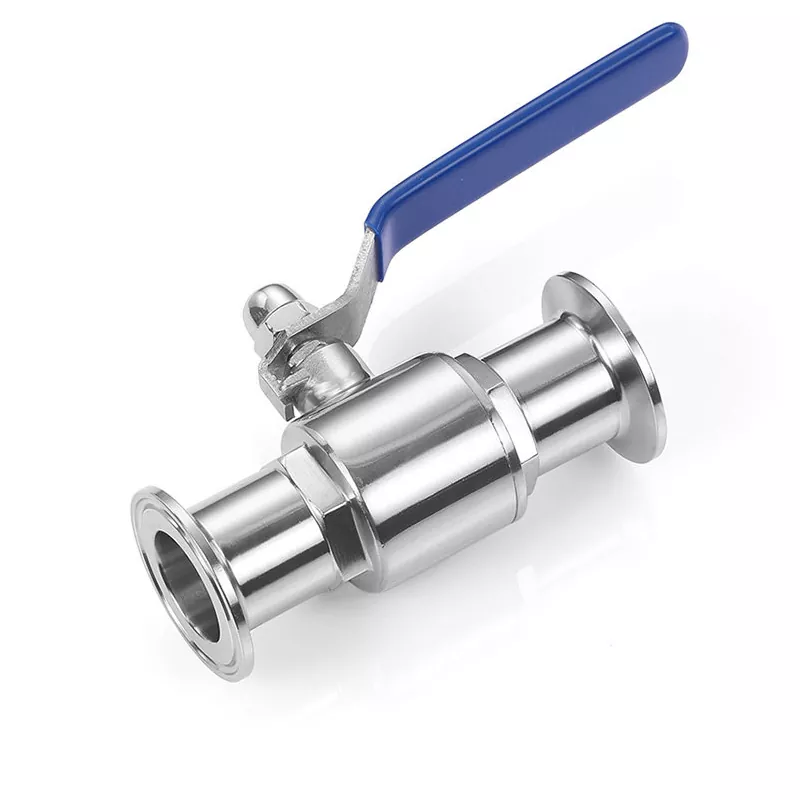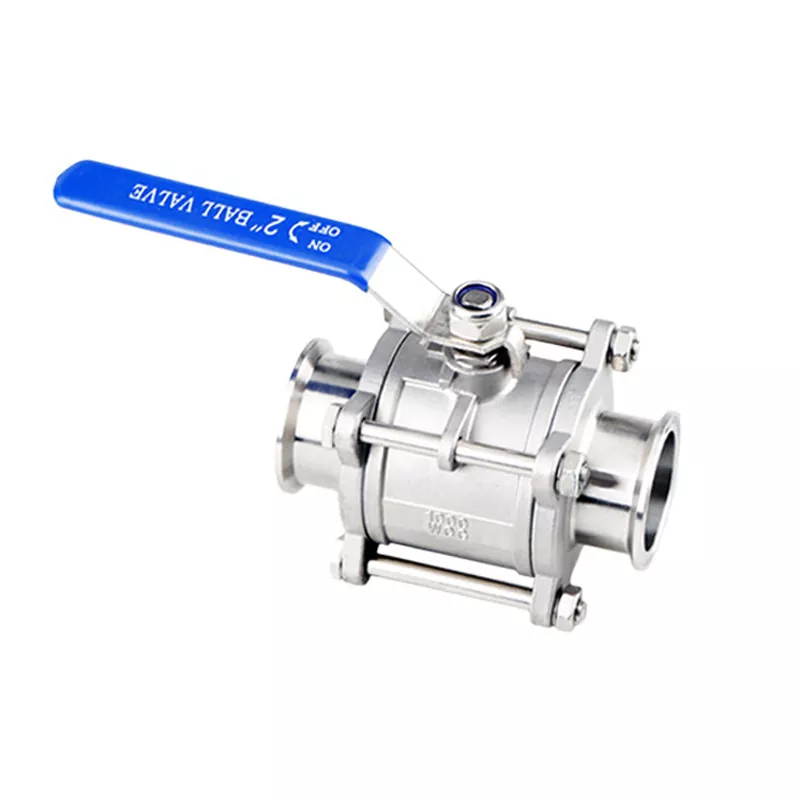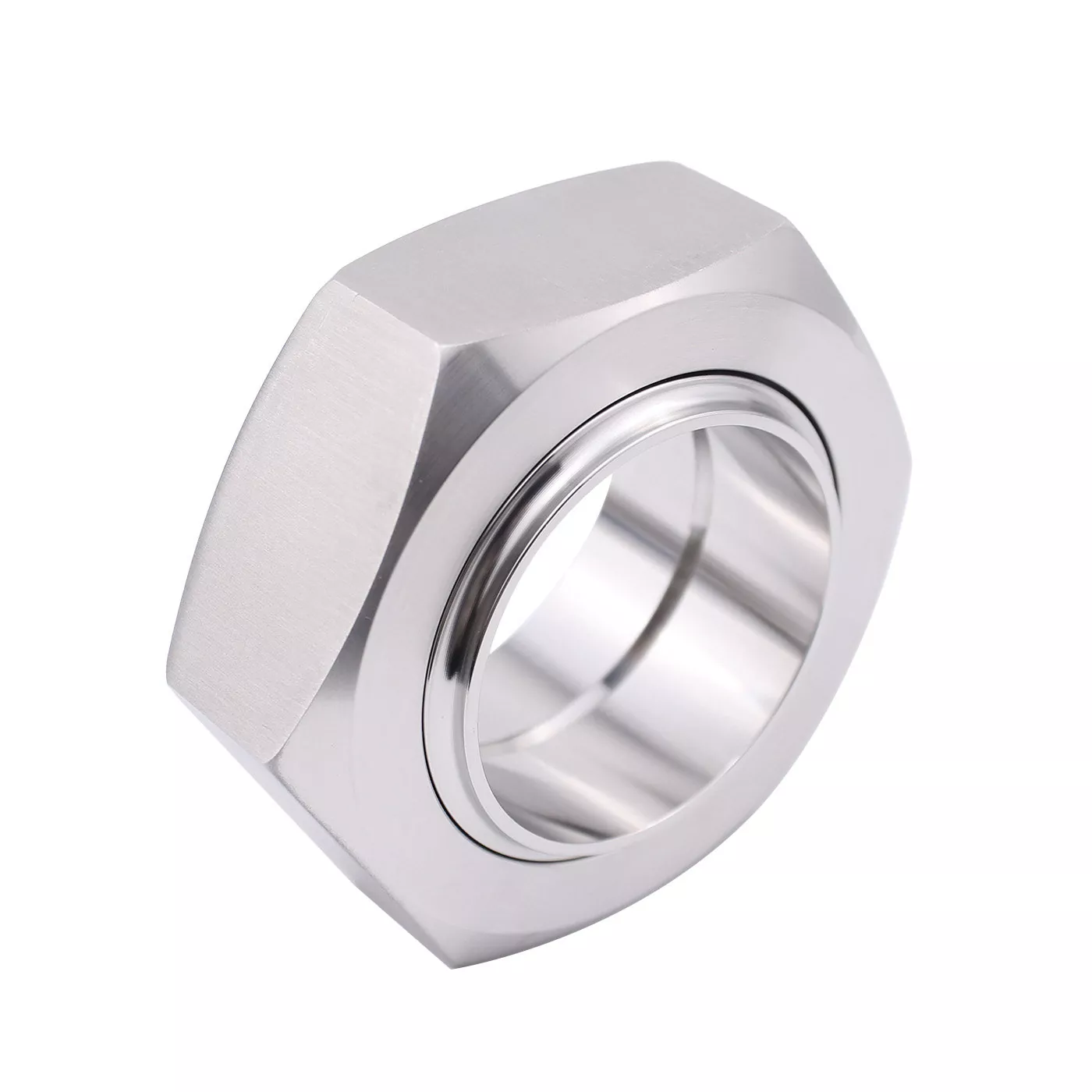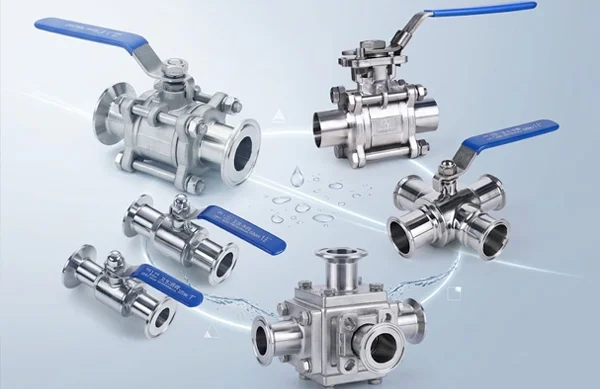
Sanitary Ball Valve solutions from DINGYUE are engineered for hygienic processing environments where product purity, cleanability, and reliable shut-off are non-negotiable. DINGYUE sanitary ball valves are widely specified in food and beverage, dairy, pharmaceutical, biotechnology, and cosmetics industries. Every valve body, ball, and connection is designed to eliminate contamination risks, reduce maintenance downtime, and deliver long-term performance. With stringent attention to surface finish, material traceability, and industry compliance, DINGYUE helps processors achieve consistent product quality across batch and continuous operations.
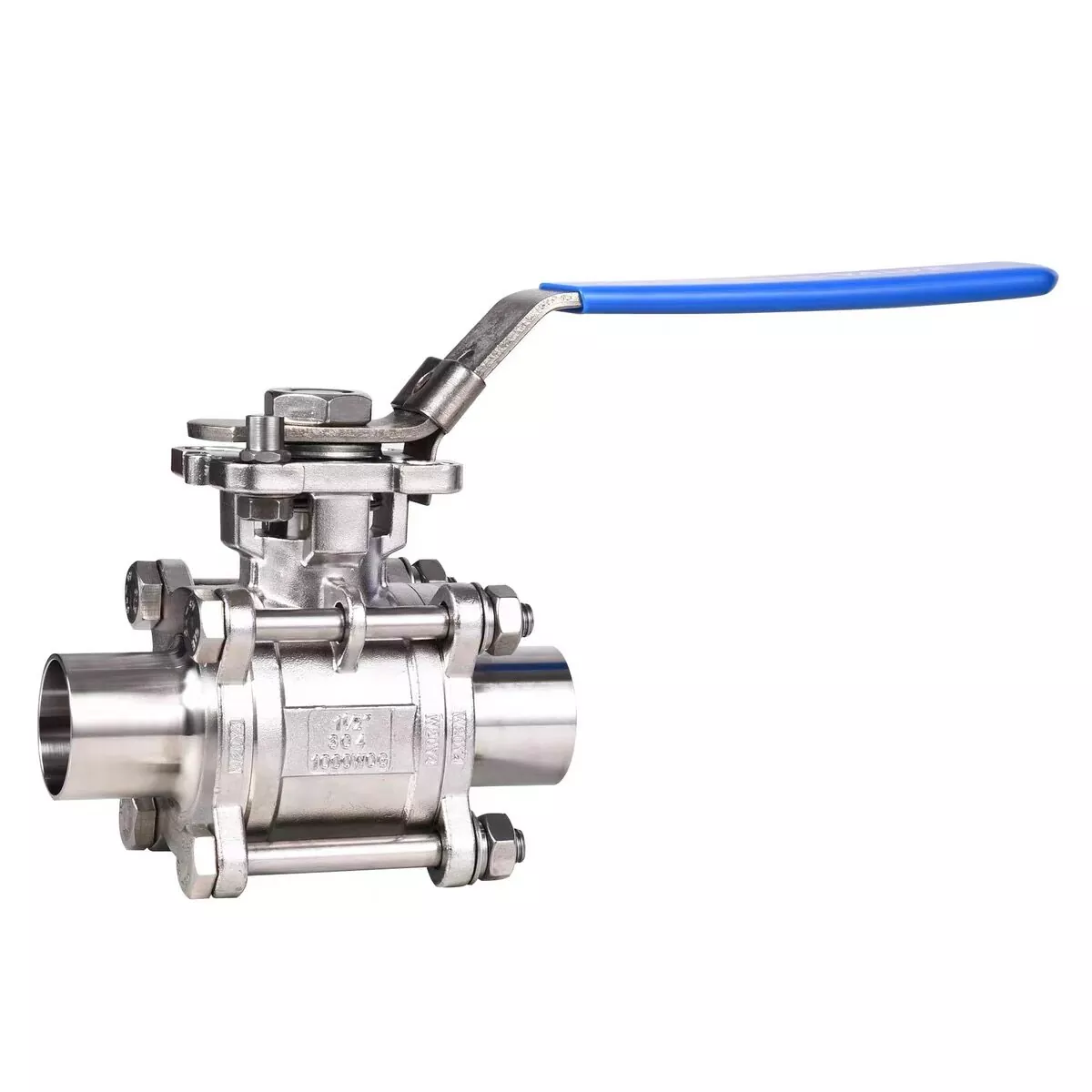
The DINGYUE sanitary ball valve is a quarter-turn shut-off device built specifically for hygienic pipelines. Unlike standard industrial ball valves, this valve features crevice-free wetted surfaces, full-bore construction, and high-purity materials that comply with FDA and 3A standards. The valve is available in manual and automated configurations, making it suitable for liquid processing, ultra-pure water systems, fermentation, and clean-in-place (CIP) applications.
Question: What certifications do DINGYUE have?
Answer: DINGYUE valves are manufactured under an ISO 9001 certified quality system. Standard compliance includes FDA 21 CFR 177.1550 for PTFE seats, FDA 21 CFR 177.2600 for elastomers, USP Class VI for plastic and elastomer materials, and 3A Sanitary Standards for hygienic design. Valves intended for the European market carry CE marking under the Pressure Equipment Directive 2014/68/EU. On request, DINGYUE can provide 3.1 material certificates for wetted parts, surface roughness test reports, and factory acceptance test documentation.
Question: What temperature and pressure ratings apply ?
Answer: Standard DINGYUE valves with PTFE seats operate from -20°C to 150°C and are rated for working pressures up to 1000 psi (69 bar) at 20°C. With TFM 1600 seats, the temperature range extends slightly upward while improving steam resistance. PEEK seats allow continuous operation up to 200°C. Pressure ratings decrease at elevated temperatures, so DINGYUE recommends consulting the pressure-temperature curve for the specific seat material and size before final specification.
Question: How do I choose the right seat material ?
Answer: Seat material selection depends on process temperature, chemical exposure, cleaning media, and operating cycle frequency. PTFE is the best general-purpose choice for food and beverage lines with temperatures up to 150°C. TFM 1600 provides better sealing consistency under steam and is easier to machine to exact tolerances, making it ideal for pharmaceutical cleaning validation. PEEK is necessary when temperatures exceed 150°C or when aggressive cleaning chemicals are used. DINGYUE technical engineers can review your cleaning SOP and media compatibility to recommend the correct seat option.
Question: What surface finish options are available for hygienic applications?
Answer: DINGYUE offers three standard surface finish levels for wetted components. Ra 0.8 μm is suitable for general food and beverage service. Ra 0.4 μm is recommended for pharmaceutical and biotechnology processes where cleaning validation is more demanding. Ra 0.25 μm is an electropolished finish that provides the highest cleanability and corrosion resistance for ultra-pure water and aseptic processing. All surface finishes are measured using a calibrated profilometer, and surface roughness certificates are available on request.
Question: Can DINGYUE sanitary ball valves be automated?
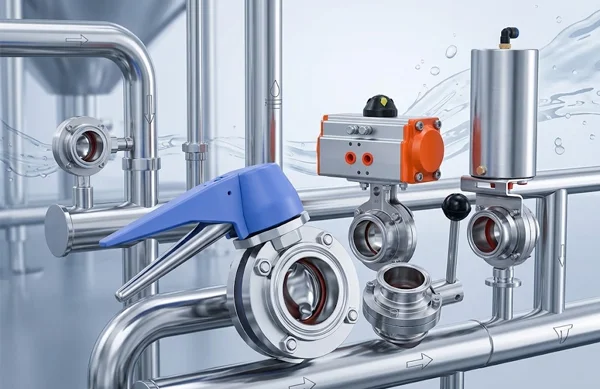
Answer: Absolutely. DINGYUE offers pneumatic and electric actuation packages for all valve sizes from 1/2" to 4". Pneumatic actuators are available with double-acting or spring-return operation and accept standard NAMUR solenoid valves. Electric actuators are supplied with 24V AC/DC, 110V AC, or 230V AC power inputs and can include modulating control or open/close functionality. All automated packages include a visual position indicator and can be equipped with limit switch feedback, AS-interface, or IO-Link communication.
Question: How should I install and maintain a DINGYUE valve?
Answer: Installation should follow standard hygienic piping practices. Remove protective caps, inspect the bore, use correctly sized tri-clamp gaskets, and tighten clamps evenly. The handle or actuator should be accessible and clearly shows open and closed positions. During scheduled maintenance, cycle the valve, inspect seats and seals for wear, and replace any damaged components with genuine DINGYUE spare parts. Always use FDA-compliant lubricants. With proper care, a DINGYUE sanitary ball valve will provide years of reliable service in hygienic processing lines.