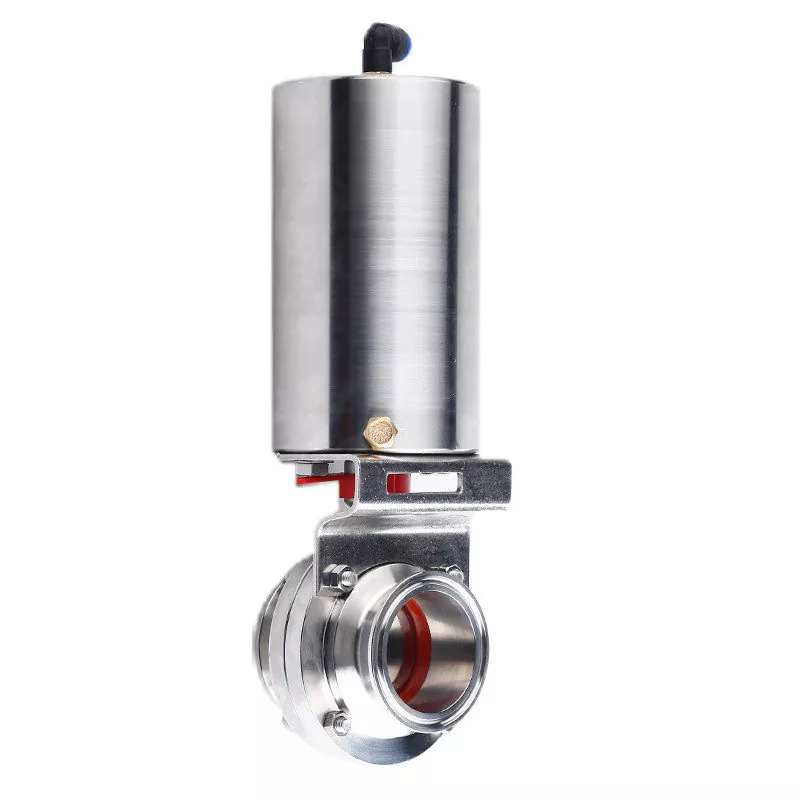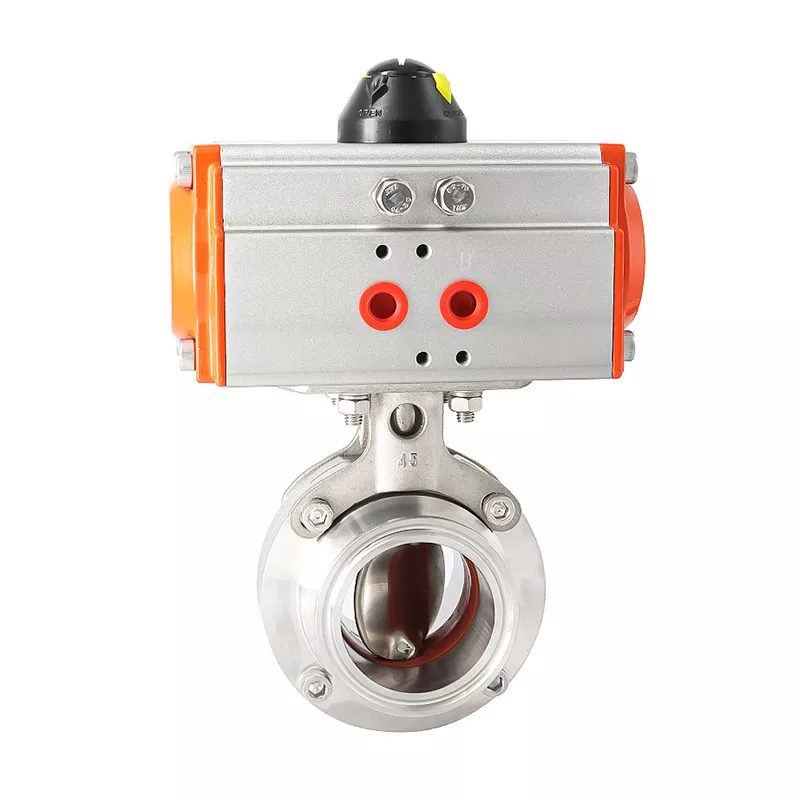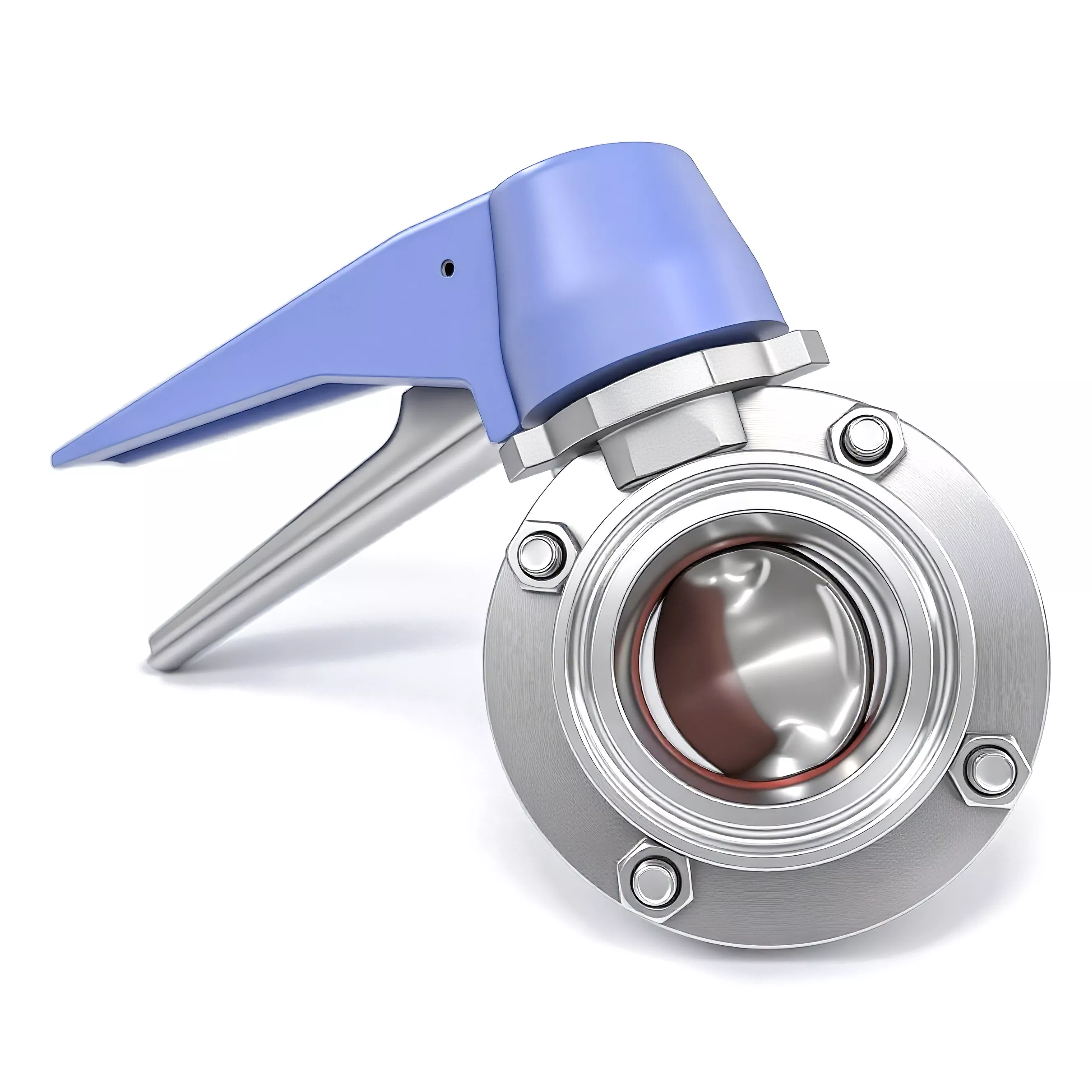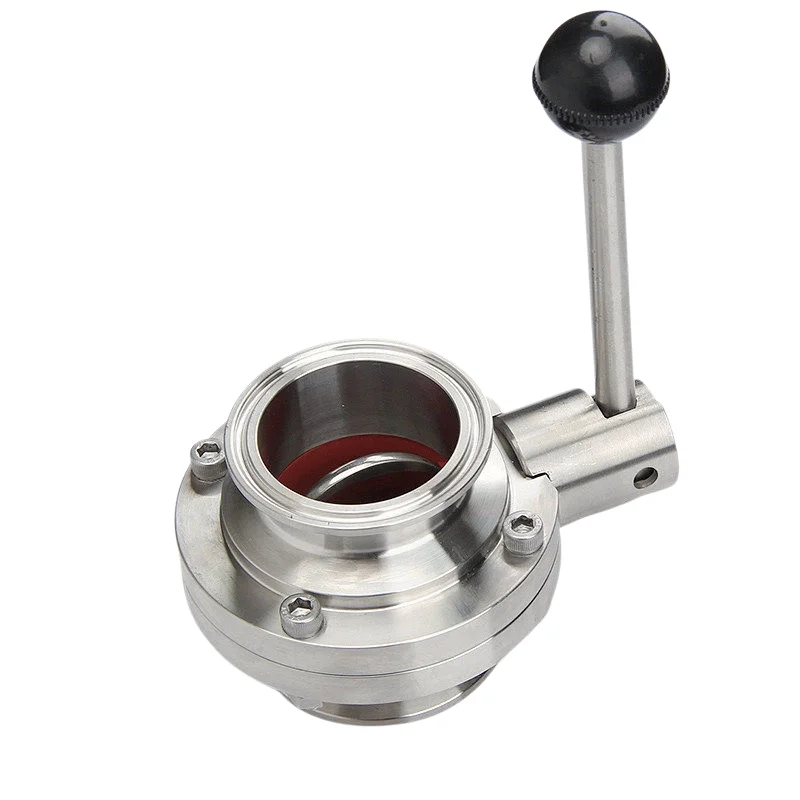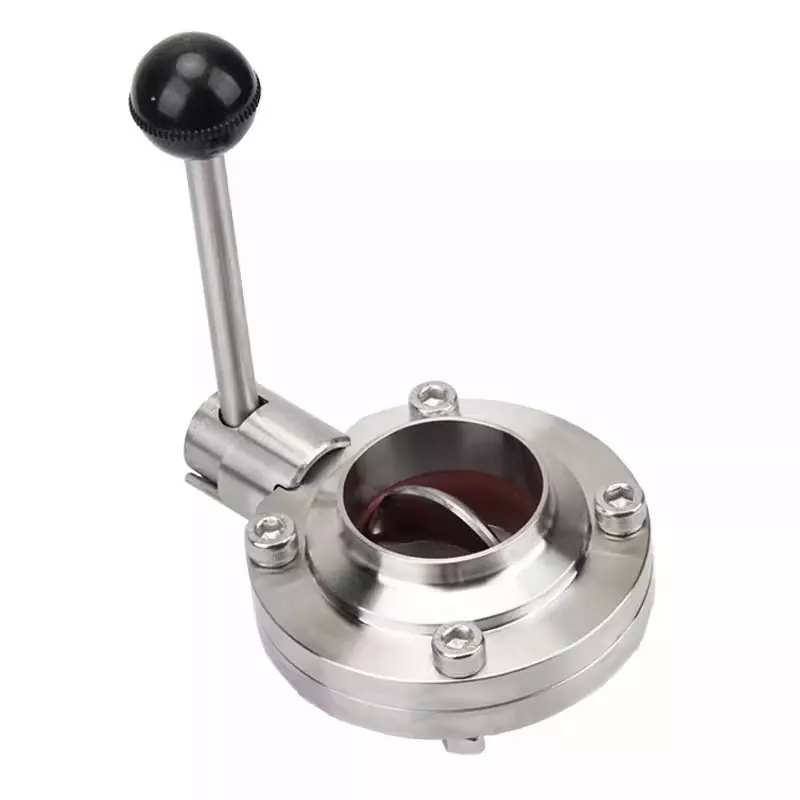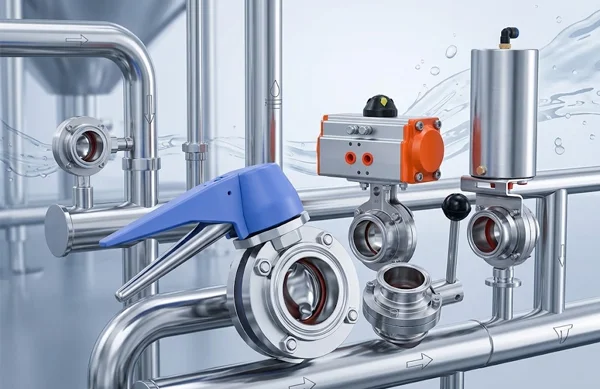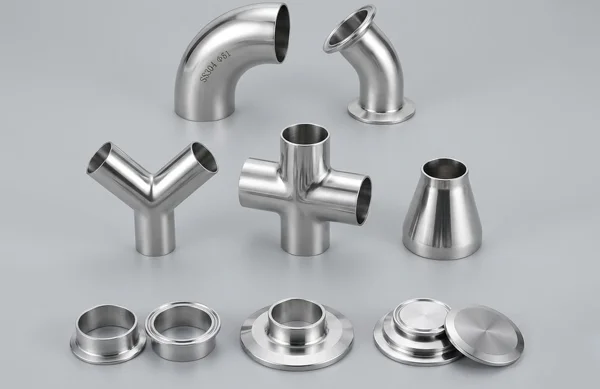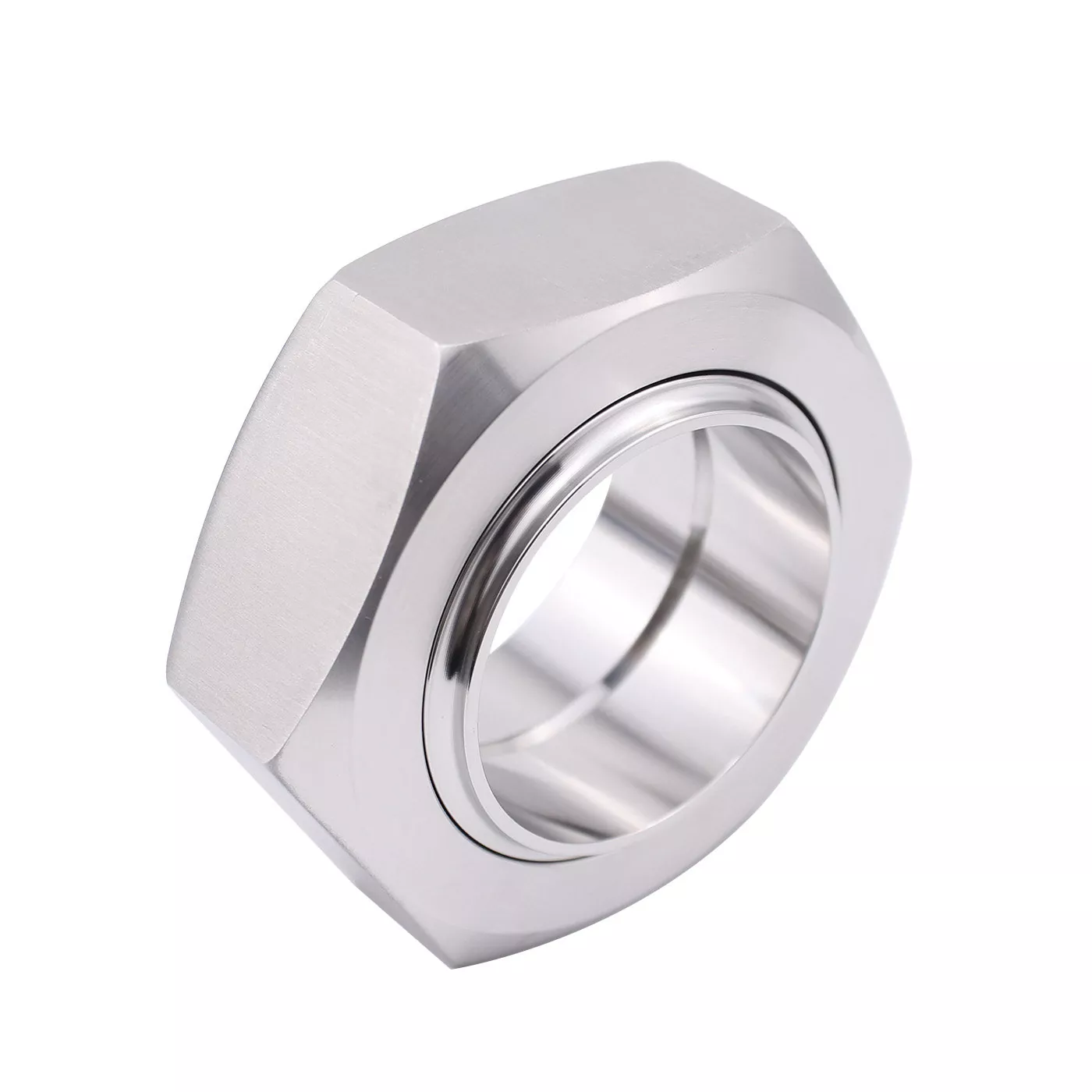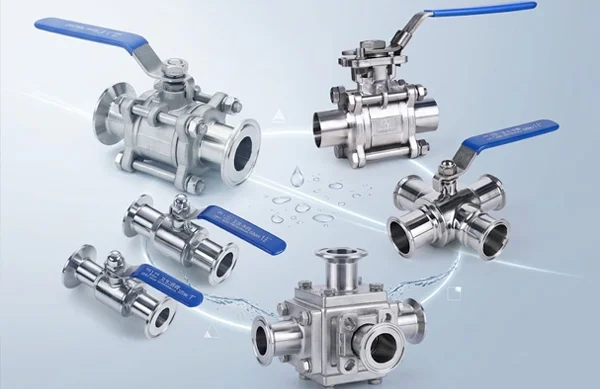
The Sanitary Butterfly Valve is a quarter-turn flow control device engineered for clean-in-place and sterilize-in-place processing lines. DINGYUE manufactures this valve family with a precision-machined AISI 316L disc, an FDA-compliant elastomer seat, and a low-turbulence body profile that prevents product entrapment. The design is widely used in food, beverage, dairy, pharmaceutical, biotechnology, and cosmetic plants to regulate, isolate, and divert liquids, powders, and gases without compromising sterility or batch integrity.
DINGYUE builds each valve body with crevice-free internal geometry. The disc hub is machined to reduce dead space, and the seat is designed for snap-in replacement without requiring special tools. The standard surface finish supports effective CIP flow, while optional electro-polishing further reduces microbial adhesion and biofilm formation.
Selecting the correct valve configuration requires evaluating product characteristics, cleaning media, operating temperature, pressure drop limitations, and automation requirements. The following criteria help process engineers specify the right DINGYUE sanitary butterfly valve.
Proper installation extends seat life and maintains cleanability. DINGYUE recommends installing the valve with the disc in a partially open position during welding to avoid heat damage to the seat. For tri-clamp installations, use the correct gasket size and align the clamp segments evenly to avoid distortion. The valve should be mounted so that the body drains completely when closed.
Routine maintenance includes periodic inspection of the seat for cuts, swelling, or compression set. The seat can be removed and replaced without removing the valve body from the line in most tri-clamp configurations. When replacing the seat, apply a food-grade compatible lubricant only if required by the seating material. For automated valves, verify actuator stop positions and limit switch settings at least once per quarter or after any process upset.
Q: What materials are available ?
A: DINGYUE supplies body and disc materials in AISI 304, AISI 316L, duplex 2205, and AL-6XN for corrosive environments. Seat materials include EPDM, FKM, PTFE, silicone, and NBR. Each material combination is selected based on product chemistry, cleaning agents, steam exposure, and temperature cycling. Certificates for material traceability are included with every valve.
Q: How do I choose between tri-clamp and welded connections?
A: Tri-clamp connections allow rapid disassembly for inspection, cleaning, and seat replacement. They are ideal for lines that require frequent product changeovers. Welded connections provide a permanent, crevice-free joint that eliminates gasket surfaces and is preferred for high-purity water systems or continuous processes where minimal maintenance access is acceptable. Your choice should consider cleaning frequency, line access, and validation requirements.
Q: Can a sanitary butterfly valve handle high-temperature CIP and SIP processes?
A: Yes, when the seat material is selected correctly. EPDM seats generally handle saturated steam at 248°F / 120°C for short cycles. Silicone seats can operate up to 392°F / 200°C for dry heat or repeated steam exposure. PTFE seats offer a broad range from -40°F to 356°F / -40°C to 180°C. Always verify the specific steam pressure and cycle duration against the seat material data before specification.
Q: Are DINGYUE sanitary butterfly valves 3-A and FDA compliant?
A: Yes. DINGYUE valves are designed to meet 3-A Sanitary Standards and FDA requirements for food contact materials. Elastomer seats comply with FDA 21 CFR 177.2600, and surface finishes meet the requirements for hygienic product contact surfaces. Documentation is available for validation packages and regulatory audits.
Q: How often should the seat be replaced?
A: Seat life depends on cycle frequency, process temperature, cleaning chemicals, and steam exposure. Under normal food and beverage conditions, an EPDM seat may last 12 to 24 months. Aggressive cleaning agents, high temperatures, or abrasive products shorten seat life. DINGYUE recommends visual inspection every six months and replacement whenever cuts, swelling, hardening, or permanent compression set are observed.